CARDIFF UK
CARDIFF
HomeInvestigationEnsayo CPT (Cone Penetration Test)

CPT (Cone Penetration Test) in Cardiff

Evidence-based design. Reliable delivery.

LEARN MORE

Cardiff sits on the Severn Estuary floodplain, with ground elevations ranging from sea level to about 40 metres in the northern suburbs. The underlying geology is a mix of Mercia Mudstone, Glacial Till, and Holocene alluvium in the city centre and Cardiff Bay. A Cone Penetration Test in Cardiff is our preferred method for continuous stratigraphic profiling, because the soft alluvial clays and loose sands respond well to the 15 cm² cone. Before we mobilise the rig, we often pair it with a georradar survey to map buried services and with MASW measurements to correlate vs30/" data-interlink="1">shear wave velocities at depth. The whole operation is quick — typically 30 metres in one shift — and delivers real-time data.
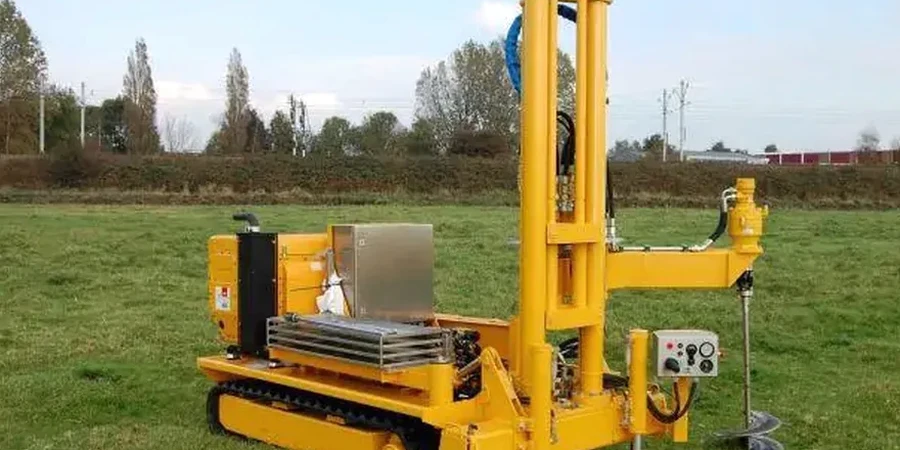
Illustrative image of CPT (Cone Penetration Test) in Cardiff
Continuous CPT profiling in Cardiff's alluvium reveals strength variations that discrete sampling would miss. It is the fastest way to zone the site for foundation design.

Our service areas

Process overview

The Glacial Till in northern Cardiff is dense and often contains cobbles, which can deflect the cone. For that reason we run a seismic cone with pore pressure sensor (CPTu) to differentiate drained from undrained behaviour in the laminated clays. The alluvial sequence in Cardiff Bay is softer, with undrained shear strengths as low as 20 kPa near the surface. We log cone resistance (qc), sleeve friction (fs), and pore pressure (u2) every 2 cm. That gives a near-continuous profile of soil behaviour type using Robertson´s chart. A typical parameter set we report includes:
Technical reference — Cardiff

Local context

The CPT rig in Cardiff is a 20-tonne truck-mounted unit with a 200 kN reaction frame. It pushes a 60° conical tip at a constant rate of 20 mm/s. We use a 1 m² stabilising plate when the alluvium is too soft to provide reaction. The biggest risk in Cardiff Bay is a perched water table within the first 2 metres; we pre-drill a steel casing through the fill to avoid pore pressure build-up that could liquefy loose sands around the cone. Every push is monitored on a real-time display, and we stop immediately if the cone hits a boulder or a buried concrete slab.

Need a geotechnical assessment?

Reply within 24h.

Email: contact@geotechnical-engineering.biz

Relevant standards


BS EN 1997-2 (Eurocode 7 – Ground investigation and testing), BS 5930:2015 (Code of practice for ground investigations), ISO 22476-1:2012 (Geotechnical investigation and testing – Field testing – Part 1: Electrical cone and piezocone penetration test), BS EN ISO 22476-1 (Standard Test Method for Electronic Cone Penetration Testing of Soils)

Typical values

ParameterTypical value
Cone tip resistance (qc)0.5 – 25 MPa (range in Cardiff soils)
Sleeve friction (fs)10 – 250 kPa
Pore pressure (u2)0 – 500 kPa
Soil Behaviour Type (SBT)Robertson chart zones 2 to 7
Penetration rate20 mm/s per ISO 22476-1
Depth capacity (Cardiff rig)35 m in soft soils, 20 m in till

Q&A


How much does a CPT in Cardiff cost?

A standard CPT push to 20 m depth in Cardiff typically ranges between £130 and £190 per linear metre, depending on access and the number of dissipation tests. This includes the cone, data acquisition, and a preliminary log within 48 hours. Additional seismic cone or pore pressure sensors may add £15–£25 per metre.

What is the difference between CPT and SPT for Cardiff soils?

CPT provides a continuous profile of cone resistance and sleeve friction, which is ideal for the layered alluvium and glacial till found in Cardiff. SPT gives discrete blow counts at 1 to 1.5 metre intervals, which can miss thin layers. In soft clays, SPT often returns low blow counts (N < 5) that are hard to interpret, whereas CPT measures the full strength profile. We recommend CPT for settlement and liquefaction assessments, and SPT when gravel or cobbles prevent cone penetration.

Do I need a CPT for a residential extension in Cardiff?

It depends on the ground conditions. If your extension is on the alluvial plain near the River Taff or in Cardiff Bay, the soft clay and high water table make a CPT valuable for bearing capacity and slab design. For extensions on the Glacial Till in northern Cardiff, a cheaper option like a hand-dug test pit with a plate load test is often sufficient. We can advise after a site walkover.

Visual overview

Location and service area

We serve projects across Cardiff.

Location and service area