CARDIFF UK
CARDIFF
HomeSlopes & WallsMSE Wall Design

MSE Wall Design in Cardiff — Reinforced Soil Solutions for Urban and Coastal Projects

Evidence-based design. Reliable delivery.

LEARN MORE

Design of Mechanically Stabilized Earth walls for Cardiff sites must consider the variable ground conditions left by the last glaciation — from dense glacial till beneath the city centre to soft estuarine alluvium along Cardiff Bay. We follow Eurocode 7 (EN 1997-1:2004) and BS 8006-1:2010 for reinforcement design, ensuring internal and external stability are verified against Serviceability and Ultimate Limit States. For projects near the River Taff or in the former docklands, high groundwater often requires a carefully designed drainage blanket behind the wall face. Before defining the reinforcement layout, a proper estudio de mecánica de suelos is essential to characterise the backfill envelope and foundation bearing capacity.
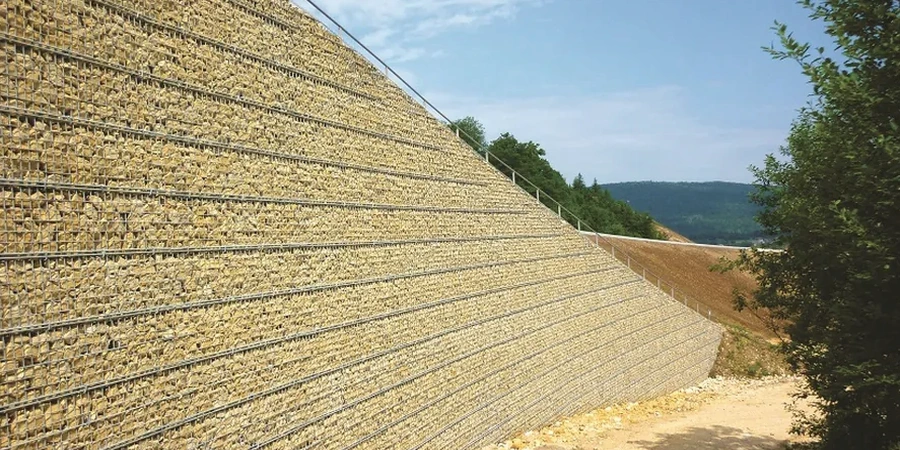
Illustrative image of MSE (Mechanically Stabilized Earth) wall design in Cardiff
Dense glacial till near Cardiff city centre gives good foundation support, but soft alluvium under Cardiff Bay demands careful reinforcement layout and drainage control.

Our service areas

This service complements our laboratory testing work for a complete project analysis.

Process overview

A common error we see on Cardiff construction sites is assuming a single reinforcement type works for both the lower and upper tiers of a tall MSE wall. The tensile strength required at depth — where lateral earth pressure is highest — can be twice that needed near the crest. We design each reinforcement layer according to the local stress distribution, using geogrids or steel strips selected from corrosion calculations for the specific fill pH. For walls supporting road embankments on the A48 corridor, we also integrate drenaje geotécnico to prevent hydrostatic build-up behind the facing panels. When the wall is founded on soft alluvium, a phased construction sequence is key: we combine staged filling with asentamiento monitoring to control differential movement. Facing elements are typically dry-cast concrete panels or wrapped-face systems depending on the aesthetic and slope geometry, and every design includes a full pull-out resistance check against the BS 8006 partial factors.
Technical reference — Cardiff

Local context

The tidal influence of the Bristol Channel creates a fluctuating groundwater table in Cardiff's coastal zones, which can saturate the reinforced fill mass and reduce effective stress — a risk that many standard designs underestimate. If the drainage layer behind the wall is undersized or clogged, pore pressures rise quickly during heavy winter rainfall, potentially triggering internal instability or facing panel displacement. Our team models each wall under both short-term (undrained) and long-term (drained) conditions, and we always include a sensitivity analysis for water level variation of ±1.5 m around the design datum.

Need a geotechnical assessment?

Reply within 24h.

Email: contact@geotechnical-engineering.biz

Visual overview


Relevant standards

BS 8006-1:2010 — Code of practice for strengthened/reinforced soils, Eurocode 7 (EN 1997-1:2004) — Geotechnical design, BS 6031:2009 — Code of practice for earthworks, BS 1377 — Tensile properties of geogrids

Typical values


ParameterTypical value
Reinforcement typeGeogrid (polyester/PET) or steel strip, selected by fill pH and design life
Design codeEurocode 7 (EN 1997-1) + BS 8006-1:2010
Maximum wall heightUp to 18 m with tiered configuration
Fill friction angle (design)32° – 42° depending on sourced granular material
Corrosion allowance (steel)0.12 mm/yr per BS 8006 for pH > 5.5
Global stability factorFS ≥ 1.3 (Bishop simplified)

Q&A

What is the difference between MSE walls and conventional reinforced concrete cantilever walls for Cardiff sites?

MSE walls are more flexible and tolerate differential settlement better — which is valuable on soft alluvium in Cardiff Bay. They also require less foundation excavation. However, they need a larger footprint behind the wall face. For tight urban sites near the city centre, a cantilever wall may be more space-efficient.

How long does an MSE wall design take for a typical road embankment project in Cardiff?

For a wall up to 8 m high with straightforward geometry, we typically complete the design — including stability checks and reinforcement schedules — within 3 to 4 weeks. Complex tiered walls or those with high groundwater may require an additional 2 weeks for the drainage and sensitivity analysis.

What fill material is suitable for the reinforced zone behind an MSE wall in Cardiff?

Granular fill with less than 15% fines, a friction angle of at least 32 degrees, and pH between 5.5 and 9.0 to avoid corrosion of steel reinforcement. Locally sourced crushed limestone from the Carboniferous Limestone belt around Cardiff works well, but we always test the specific source before finalising the design.

How much does a full MSE wall design package cost for a Cardiff development?

For a single wall up to 10 m high with standard geometry, the design package — including stability analysis, reinforcement schedules and construction drawings — ranges from £880 to £4,000 depending on complexity and site access. Costs rise if additional ground investigation or phased construction modelling is needed.

Location and service area

We serve projects across Cardiff.

Location and service area