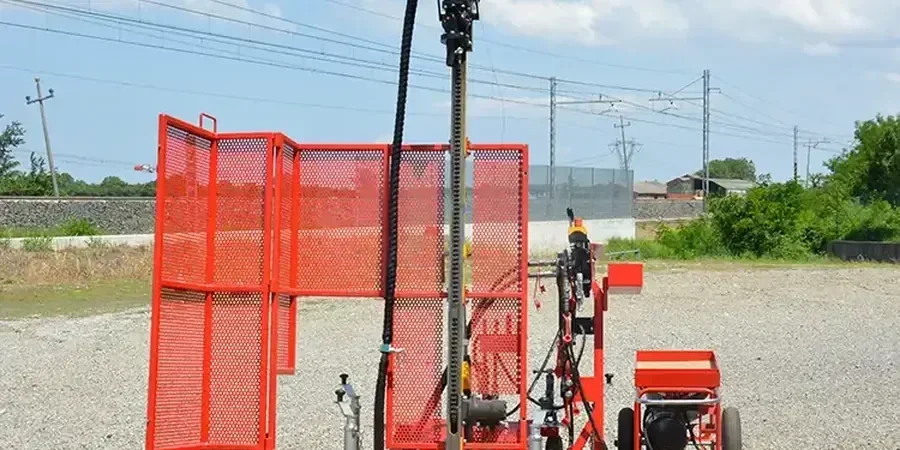
Ground investigation in Cardiff encompasses a comprehensive suite of techniques designed to characterise subsurface conditions prior to construction or redevelopment. From the historic docks to the expanding suburbs, understanding what lies beneath the surface is not merely a regulatory formality but a fundamental engineering necessity. This category covers everything from preliminary desk studies and walkover surveys to intrusive testing and laboratory analysis, providing the data required to design safe, cost-effective foundations and earthworks. In a city where post-industrial land and complex natural geology frequently intersect, a robust investigation programme is the cornerstone of risk management for any development.
Cardiff's geology presents a varied and often challenging profile that directly influences the scope of any investigation. Much of the city centre and southern districts are underlain by the Mercia Mudstone Group, with thick superficial deposits of glacial till and alluvium from the River Taff and Ely. These soft, compressible clays and silts can be prone to settlement and require careful assessment. To the north, the landscape transitions into the Pennant Sandstone measures of the South Wales Coalfield, bringing potential for shallow mine workings, faulting, and variable bedrock strength. A thorough investigation must delineate the boundary between these units, identify any made ground from centuries of industrial use, and assess risks from solution features in the underlying Carboniferous Limestone.
The regulatory framework governing ground investigation in Cardiff is firmly rooted in British Standards and UK-wide legislation. All work must comply with BS 5930:2015+A1:2020, the code of practice for site investigations, which sets out best practice for planning, execution, and reporting. Crucially, the findings of these investigations directly inform the design to meet the requirements of Eurocode 7 (BS EN 1997-1 and -2), ensuring structures are founded safely. Furthermore, the contaminated land regime under Part 2A of the Environmental Protection Act 1990 is a critical driver in this post-industrial landscape, demanding rigorous chemical testing alongside geotechnical assessment. Planning authorities in Cardiff will typically condition discharge of planning permissions on the satisfactory completion of a phased investigation in line with these standards.
The types of projects requiring these services are exceptionally diverse across the Welsh capital. Major infrastructure schemes, such as the South Wales Metro and the redevelopment of the Cardiff Central transport interchange, demand deep and extensive investigation profiles. Similarly, the ongoing transformation of Cardiff Bay and the city centre with high-rise residential and commercial blocks relies heavily on in-situ testing like CPT (Cone Penetration Test) to profile soft alluvial soils and SPT (Standard Penetration Test) for borehole-derived strength parameters. Brownfield regeneration for new housing estates, school expansions on potentially unstable slopes, and even smaller domestic extensions near historic mine entries all trigger the need for a proportionate but technically sound investigation.
A Phase 1 investigation is a preliminary desk study and walkover survey that collates historical maps, geological records, and environmental data to develop a conceptual site model and identify potential hazards. A Phase 2 investigation is the subsequent intrusive phase, involving boreholes, trial pits, and in-situ testing like CPT and SPT, to physically verify the ground conditions and collect samples for geotechnical and chemical laboratory testing.
A ground investigation is legally required as part of the building regulations and planning process whenever a development could be affected by ground conditions. This is enforced through planning conditions by Cardiff Council, particularly for sites in areas of historic mining, landfill, or flood zones. Compliance with BS 5930 and Eurocode 7 is mandatory to ensure structural safety and discharge health and safety obligations under CDM 2015 regulations.
The most common geotechnical risks in Cardiff include soft, compressible alluvial clays along the Taff and Ely river corridors leading to settlement issues, shallow abandoned mine workings in the northern Pennant Sandstone areas posing collapse risks, and variable thicknesses of undocumented made ground across the city's historic docklands and industrial zones. Contamination from former heavy industry and gas works is also a frequently encountered challenge.
The duration of a ground investigation programme in Cardiff varies significantly with site size and complexity. A small residential plot might require only a few days of intrusive fieldwork followed by two to three weeks for laboratory testing and factual reporting. In contrast, a major multi-storey development in the city centre or a linear infrastructure project can require several months of phased investigation, including specialist in-situ testing, monitoring, and detailed interpretive reporting.