CARDIFF UK
CARDIFF
HomeImprovementJet Grouting Design

Jet Grouting Design in Cardiff – Improvement for Urban Developments

Evidence-based design. Reliable delivery.

LEARN MORE

When we mobilise the jet grouting rig into a Cardiff site, the first thing we check is the access width—most of the city’s inner-urban plots were carved out in the 19th century, so tight gateways and narrow streets are the norm. The high-pressure monitor, typically running at 400 to 600 bar with a cement-bentonite slurry, cuts through the glacial tills and laminated clays that underlie much of Cardiff. We’ve found that the jet’s energy needs to be dialled back slightly in the softer Holocene deposits near the Taff and Ely rivers; otherwise, the return spoil becomes too fluid to manage. Before we design the column geometry, we always run a permeability field test to confirm the in-situ soil fabric won’t cause excessive washout.
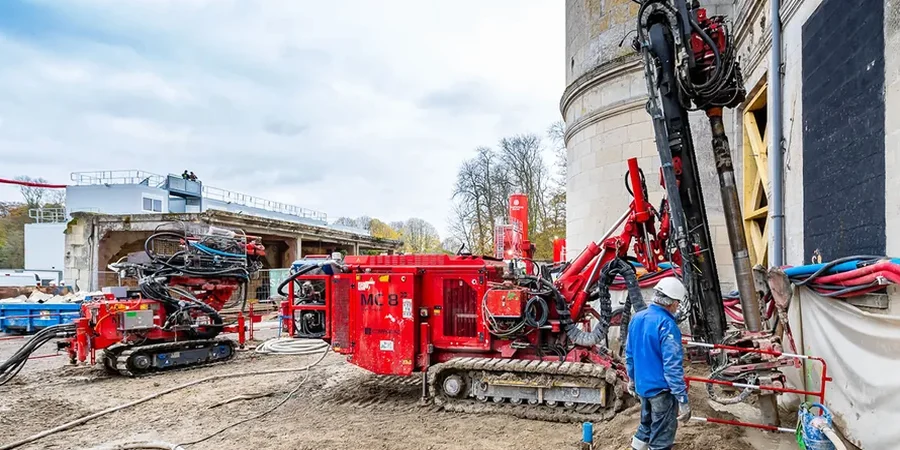
Illustrative image of Jet grouting design in Cardiff
Overconsolidated Cardiff tills with OCR > 6 demand a modified jet-grouting design to prevent column contraction and ensure full section development.

Our service areas

Process overview

The design methodology follows Eurocode 7 (EN 1997-1:2004) and BS 5930:2015, with a particular emphasis on the Cardiff-specific stress history. Overconsolidated till here has an OCR that can exceed 6 in the upper 4 m, which dramatically affects the column’s interaction with the surrounding ground. We apply a modified jet-grouting design approach that accounts for the undrained shear strength profile—typically 50–120 kPa in the stiff clays—and we cross-check with a triaxial compression test on undisturbed samples to validate the chosen column strength.

The main parameters we verify during the design stage include:
  • Column diameter (0.6–1.8 m depending on soil stiffness)
  • Unconfined compressive strength after 28 days (2–8 MPa)
  • Slurry injection pressure and flow rate (400–600 bar, 150–250 L/min)
  • Verticality tolerance (1:100 maximum deviation)
Technical reference — Cardiff

Local context

Cardiff expanded rapidly during the coal-export boom of the 1800s, and much of the modern city centre sits on made ground—old dockland infills, railway sidings, and demolition rubble from the Victorian terraces. That heterogeneous fill, often 3–6 m thick, is a nightmare for a conventional jet-grouting design because the jet finds hard pockets of masonry and then opens up suddenly in soft ash. We’ve seen columns that lost 40 % of their target diameter when the monitor hit a buried brick wall. Our approach is to run a georadar GPR survey across the site first to map those obstructions, then adjust the nozzle configuration and pressure in the design phase.

Need a geotechnical assessment?

Reply within 24h.

Email: contact@geotechnical-engineering.biz

Relevant standards


Eurocode 7 (EN 1997-1:2004), BS 5930:2015 – Code of practice for ground investigations, ASCE Grouting Committee guidelines for jet grouting, CIRIA C579 – Grouting for ground engineering

Typical values

ParameterTypical value
Column diameter0.6 – 1.8 m
Unconfined compressive strength (28 days)2 – 8 MPa
Injection pressure400 – 600 bar
Slurry flow rate150 – 250 L/min
Rod withdrawal speed5 – 15 cm/min
Maximum verticality deviation1:100

Q&A


What is the typical jet grouting column diameter for Cardiff’s glacial tills?

In the stiff, overconsolidated tills we typically achieve diameters of 0.8 to 1.4 m with a single-fluid system. Softer alluvial layers near the rivers can yield columns up to 1.8 m, but the design must account for the higher permeability that can cause washout of the cement slurry.

How does the design account for made ground and old foundations in the city centre?

We incorporate pre-construction georadar or probe drilling to locate buried obstructions like Victorian footing stones or dock fill debris. The jet-grouting design then adjusts the nozzle angle, pressure, and lift speed to maintain column integrity through those hard pockets. In severe cases we stagger the columns to bypass the obstruction.

What is the cost range for jet grouting design in Cardiff?

For a typical urban infill site in Cardiff, the design and verification package ranges from £1,400 to £4,420, depending on the number of trial columns, load tests, and the complexity of the ground model. This includes the desk study, parameter selection, column layout, and a testing protocol for validation.

Location and service area

We serve projects across Cardiff.

Location and service area