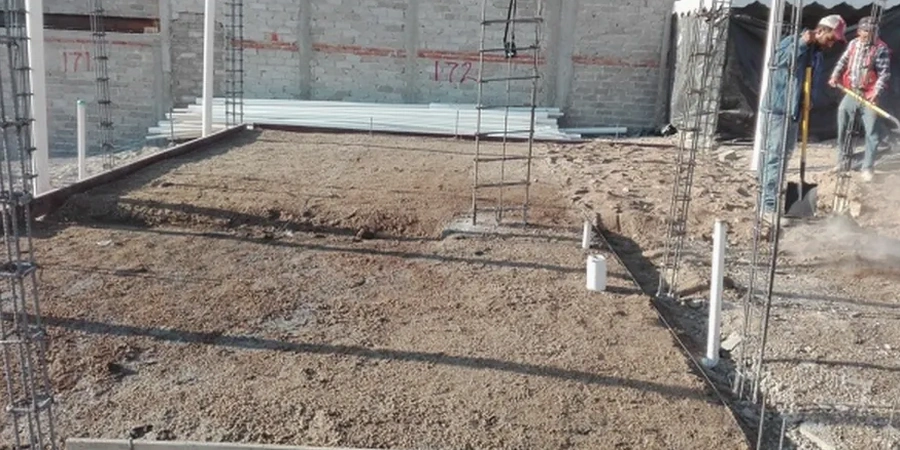
Foundations form the critical interface between any structure and the ground beneath it, transferring loads safely while accommodating the unique challenges posed by local ground conditions. In Cardiff, the design and construction of foundations demand a thorough understanding of the region's varied geology, from the strong Mercia Mudstone bedrock to the thick alluvial deposits along the River Taff and Ely valleys. A robust foundation strategy ensures long-term stability, prevents costly structural damage, and complies with stringent safety standards, making it an indispensable phase in any construction project across the Welsh capital.
Cardiff's geological profile is dominated by Triassic Mercia Mudstone, often overlain by glacial till, river terrace gravels, and extensive made ground in its historic docklands and city centre. These superficial deposits can be highly variable, with pockets of soft clay, peat, and loose sands frequently encountered. Such conditions elevate the risk of differential settlement, a common issue where parts of a building sink at different rates, leading to cracking and serviceability failures. A detailed differential settlement analysis is therefore essential for projects on heterogeneous ground, ensuring the foundation design accommodates these variations without compromising structural integrity.
All foundation works in Cardiff must adhere to the relevant British Standards and Eurocodes, primarily Eurocode 7 (BS EN 1997) for geotechnical design, along with its UK National Annex. The Building Regulations 2010, specifically Approved Document A, governs structural safety, while the NHBC Standards provide additional benchmarks for residential developments. Key design considerations include bearing capacity, allowable settlement, and resistance to sliding and overturning. For sites with deep, poor-quality soils, a settlement analysis quantifies the magnitude and time-rate of consolidation, guiding the choice between shallow pad or raft foundations and deeper piled solutions. Where historical fill is present, an analysis of foundations on fill becomes mandatory to assess the risk of collapse compression or chemical attack on buried concrete.
This category serves a broad spectrum of projects, from high-rise apartment blocks in Cardiff Bay to industrial warehouses on the Tremorfa steelworks site and residential extensions in established suburbs like Whitchurch. Infrastructure schemes, such as the South Wales Metro, also rely on advanced foundation engineering for bridges and retaining walls. In areas of low to moderate seismicity, the UK National Annex to Eurocode 8 may trigger the need for seismic foundation design, particularly for critical or high-consequence structures. For constrained urban plots or retrofitting existing buildings, micropile design offers a versatile, low-vibration solution that can transfer loads through weak strata to competent bedrock. By integrating rigorous site investigation with tailored design, foundation engineering in Cardiff mitigates ground risks and delivers durable, safe structures for generations.
The main issues stem from the city's varied superficial deposits overlying Mercia Mudstone. Soft alluvial clays and peat along river valleys can cause excessive settlement, while loose made ground in former docklands and industrial areas risks differential settlement and potential chemical attack. Seasonal shrinkage and swelling of near-surface clays also affect shallow foundations, making a detailed ground investigation and site-specific analysis essential.
Not always; the choice depends on ground conditions and structural loads. Shallow pad or strip foundations may suffice on competent gravels or shallow bedrock in northern suburbs. However, where thick, compressible soils or contaminated fill are present, deep solutions like driven piles or micropiles become necessary to reach stable strata and limit settlement to acceptable levels.
Foundation design in Cardiff must comply with Eurocode 7 (BS EN 1997) and its UK National Annex, alongside the Building Regulations 2010 (Approved Document A for structure). The NHBC Standards apply to new homes, while the Welsh Government's Technical Advice Notes may influence design for larger developments. All designs must demonstrate adequate bearing capacity, settlement control, and durability.
Typical signs include diagonal cracks around doors and windows, sticking doors or windows, sloping floors, and visible gaps between walls and skirting boards. In Cardiff, these can be triggered by desiccation of clay soils from tree roots, leaking drains washing away fine soils, or consolidation of historic fill. A professional differential settlement analysis is needed to diagnose the cause and recommend remedial underpinning measures.