CARDIFF UK
CARDIFF
HomeSeismicSite Response Analysis

Site Response Analysis in Cardiff – Seismic Ground Motion Assessment

Evidence-based design. Reliable delivery.

LEARN MORE

Cardiff sits on a mix of glacial till, alluvial silts, and estuarine clays overlying Mercia Mudstone, with groundwater typically encountered between 2 m and 5 m depth across the city centre. This layered geology means seismic waves from distant sources can amplify significantly depending on the stiffness contrast between soft surface deposits and the bedrock below. A proper site response analysis in Cardiff must capture those impedance contrasts using shear-wave velocity profiles (VS30) and dynamic soil parameters. Before running the numerical model, we often recommend a microtremor HVSR survey to identify the fundamental natural frequency of the soil column, which gives a quick reality check on resonance risks for mid-rise buildings.
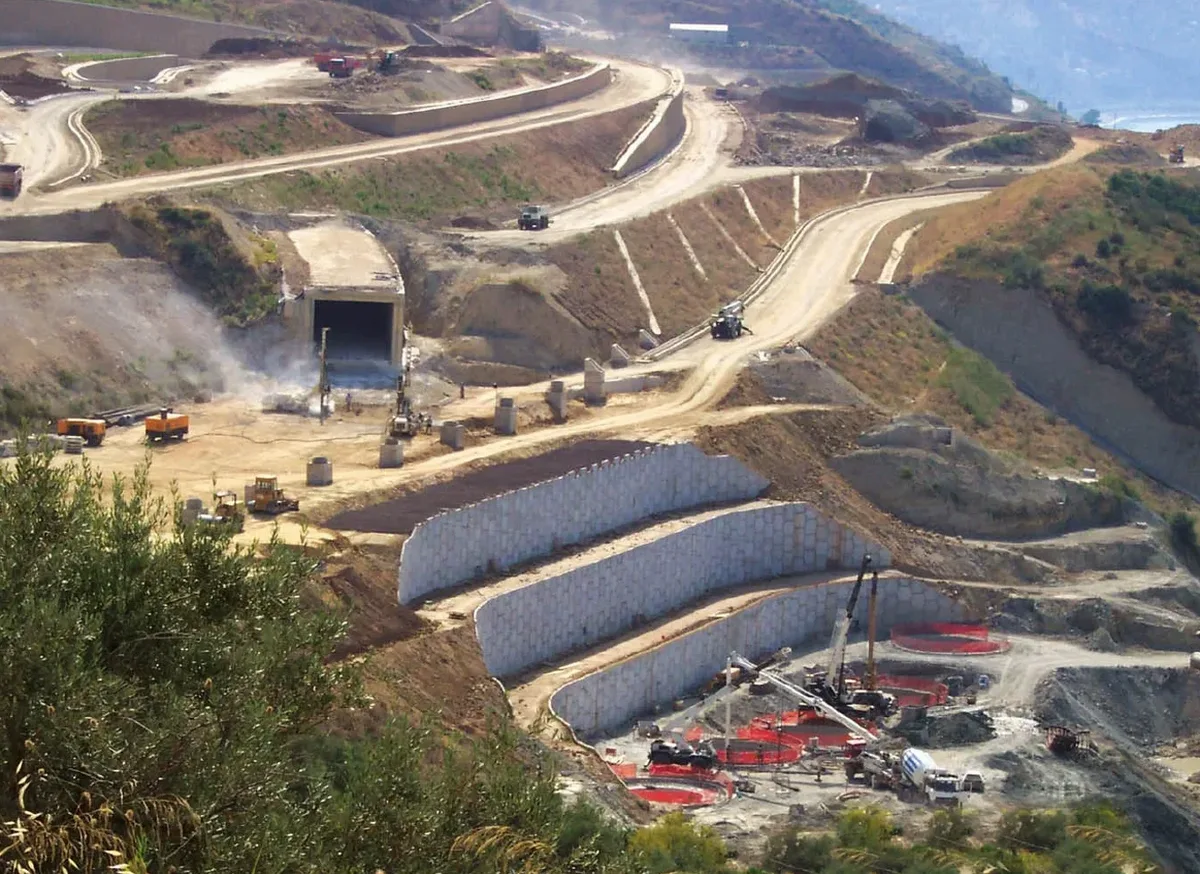
Illustrative image of Site response analysis in Cardiff
For Cardiff's alluvial deposits, ignoring soil amplification can underestimate spectral accelerations by 30 to 50 percent at mid-periods.

Our service areas

Process overview

Take a six-storey residential block planned near Cardiff Bay, where 8 to 12 m of soft alluvium overlies stiff glacial till. The site response analysis in Cardiff for that scenario would use a 1D equivalent-linear model (DEEPSOIL or STRATA) with strain-dependent modulus reduction curves from the Darendeli database, calibrated against in-situ VS30 measurements. We integrate the local shear-wave velocity profile, classified per ASCE 7 site class (typically C or D for Cardiff), and run the analysis for the UK hazard spectrum from the British Geological Survey. The output includes acceleration response spectra, amplification factors, and depth-varying shear strains. For sites with lateral variability, we pair this with a slope stability assessment when embankments or cuts are present, ensuring the dynamic response doesn't trigger deformations.
Technical reference — Cardiff

Local context

The main risk when running a site response analysis in Cardiff comes from assuming uniform soil profiles across the whole footprint. A single borehole might show 8 m of clay, but a second borehole 20 m away could hit stiff till at 4 m. That lateral variation changes the natural frequency and can lead to resonance in some parts of the building while others remain stiff. We address this by combining multiple VS30 measurements from surface-wave methods (MASW) with a careful review of existing borehole logs from the British Geological Survey database. The equipment — a 24-channel seismograph with 4.5 Hz geophones — allows us to map velocity changes at metre-scale resolution.

Need a geotechnical assessment?

Reply within 24h.

Email: contact@geotechnical-engineering.biz

Relevant standards


Eurocode 8 — EN 1998-1:2004 (seismic design), BS EN 1997-2:2007 (ground investigation), ASCE 7-22 — Site classification (VS30-based), NEHRP Recommended Provisions (site amplification)

Typical values

ParameterTypical value
Shear-wave velocity (VS30)180 – 360 m/s (site class D typical)
Fundamental frequency (f0)2.0 – 5.0 Hz (alluvial areas)
Maximum amplification factor2.5 – 4.0 at 0.3 – 0.8 s period
Groundwater depth2 – 5 m bgl (city centre)
Strain-compatible G/GmaxDarendeli (2001) curves
UK hazard PGA (475-year return)0.08 – 0.12 g for Cardiff

Q&A


How is site response analysis different from a standard seismic hazard study?

Seismic hazard gives the ground motion at bedrock level from regional faults and seismicity. Site response analysis takes that bedrock motion and propagates it through the local soil column to calculate the actual motion at the ground surface. For Cardiff's soft alluvial deposits, this step typically amplifies spectral accelerations by a factor of 2 to 4 at periods between 0.3 and 0.8 seconds.

What soil data do I need to provide for a site response study in Cardiff?

At minimum, we need a VS30 profile from MASW or downhole methods, soil classification logs (BS 5930), and groundwater depth. If available, shear-wave velocity to 30 m depth and cyclic direct simple shear tests on representative samples improve the model's accuracy. For existing BGS boreholes nearby, we can often supplement your data.

How much does a site response analysis in Cardiff typically cost?

The cost ranges from £910 to £2,990 depending on the number of profiles, depth of investigation, and whether laboratory dynamic testing is included. A single MASW line with a 1D DEEPSOIL analysis for a small residential site is at the lower end; multiple profiles with full liquefaction screening for a large commercial block reaches the upper end.

Visual overview

Location and service area

We serve projects across Cardiff.

Location and service area