CARDIFF UK
CARDIFF
HomeFoundationsSeismic Foundation Design

Seismic Foundation Design in Cardiff: Engineering for Ground Motion

Evidence-based design. Reliable delivery.

LEARN MORE

A seven-storey residential block near Cardiff Bay recently required seismic foundation design after the site investigation revealed soft alluvial soils overlying Mercia Mudstone. The ground here is far from uniform. Along the Taff estuary, you hit 8 to 12 metres of soft clays and silts before reaching competent bedrock. That kind of profile amplifies long-period ground motion, which is exactly what you need to model when designing for the 0.10 g peak ground acceleration specified for Cardiff under Eurocode 8. Before we ran our dynamic response analysis, the team completed a response spectrum analysis to map site-specific amplification factors. Without that step, shallow foundations on the soft ground would risk excessive rocking and differential rotation during a design seismic event.
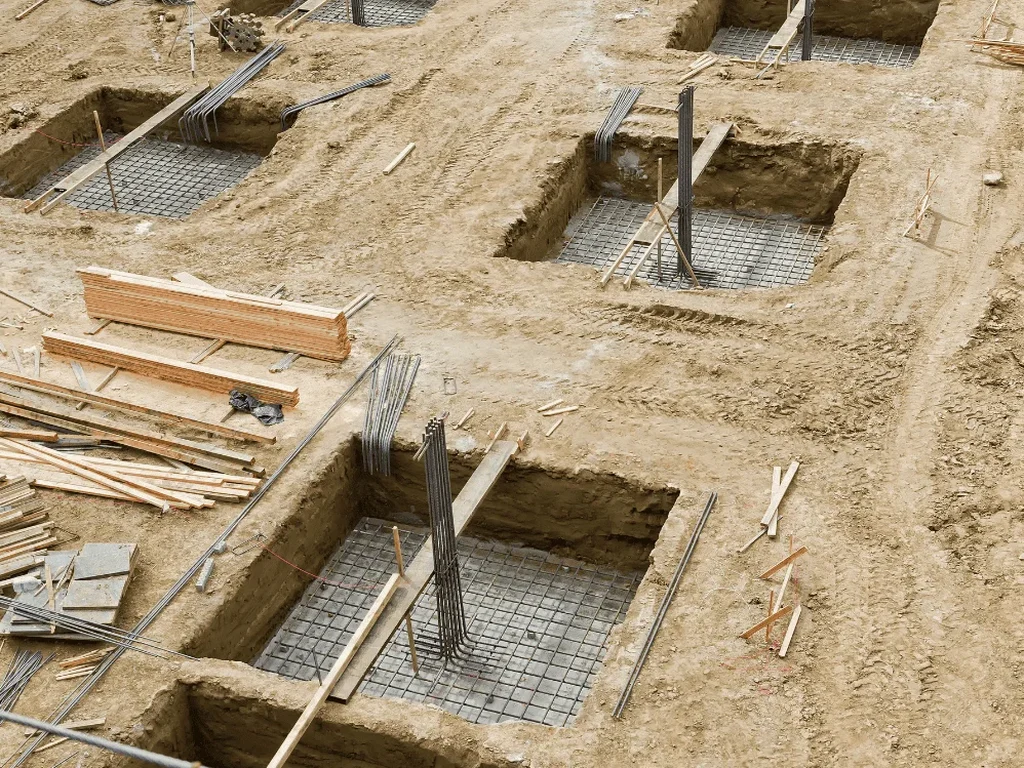
Illustrative image of Seismic foundation design in Cardiff
Cardiff's soft alluvium can amplify peak ground acceleration by up to 1.5 times compared to bedrock motion under Eurocode 8.

Our service areas

This service complements our laboratory testing work for a complete project analysis.

Process overview

The contrast between the glacial tills of Lisvane and the reclaimed ground of Cardiff Bay is stark. In Lisvane, you typically find stiff clays and gravels with SPT N-values above 35, so seismic foundation design there focuses on ductility of the superstructure rather than soil failure. Down in the Bay, where the ground was dredged and filled during the 1990s redevelopment, N-values drop to 8–15 in the top six metres. That demands a different approach: either deep foundations or Improvement. The team here routinely compares liquefaction potential across these zones using the Youd-Idriss method from the 2001 NCEER workshop. Key parameters we always check include:
  • Average shear-wave velocity (VS30) — Cardiff Bay often falls below 180 m/s (Site Class E)
  • Cyclic stress ratio (CSR) for Mw 6.0 events
  • Corrected blow counts (N1)60 in granular layers
Each project gets its own ground-motion hazard curve, not a generic table.
Technical reference — Cardiff

Local context

Cardiff sits at the northern edge of the Bristol Channel, a region with a moderate seismicity rate of about 0.03 g return period for a 475‑year event. But the real risk isn't the shaking itself — it's the basin effect. The deep Quaternary deposits that fill the Cardiff Basin can trap and amplify surface waves, especially in the 0.2–0.6 s period range that affects low‑ to mid‑rise buildings. Add to that the high water table within 2 m of the surface in many riverside areas, and you get a classic recipe for strength loss in cohesionless soils. Seismic foundation design must therefore include a site‑specific ground response analysis following ASCE/SEI 7‑16 recommendations, not just a code‑based spectrum. Ignoring the basin amplification has caused structural damage in similar UK settings during the 1984 Lleyn Peninsula earthquake.

Need a geotechnical assessment?

Reply within 24h.

Email: contact@geotechnical-engineering.biz

Relevant standards


Eurocode 8 (BS EN 1998‑1:2004 + UK National Annex), NCEER 2001 — Youd & Idriss (liquefaction evaluation), ASCE/SEI 7‑16 — Site‑specific ground motion procedures

Typical values

ParameterTypical value
Peak Ground Acceleration (PGA)0.10 g (Eurocode 8, UK National Annex)
VS30 (Cardiff Bay)140–175 m/s – Site Class E
VS30 (Lisvane tills)280–350 m/s – Site Class B/C
Design spectrum typeType 1 (low-to-moderate seismicity)
Allowable bearing pressure (Bay fill)80–120 kPa (unimproved)
Soil amplification factor (Fa)1.0–1.5 depending on period

Q&A


Is Cardiff considered a high‑seismicity zone for foundation design?

No — the UK National Annex to Eurocode 8 classifies most of South Wales as low‑to‑moderate seismicity, with a reference PGA of 0.10 g on rock. However, the soft alluvial soils in Cardiff Bay and along the Taff valley can amplify that motion significantly, so a site‑specific response analysis is recommended for buildings in Importance Class III or higher.

What is the typical cost for a seismic foundation design study in Cardiff?

A full scope — including boreholes, VS30 profiling, laboratory dynamic testing, and a ground response analysis — usually falls between £1.030 and £3.700, depending on the number of boreholes and the complexity of the soil profile. Smaller projects with existing data may cost less.

Do I need a liquefaction assessment for a housing development in Pontcanna?

It depends on the water table depth and soil gradation. In Pontcanna the groundwater is often 3–5 m deep and the soils are largely glacial tills with fines content above 35 %, so liquefaction risk is low. But if the site borders the Taff and shows loose silty sands, we should run a screening using the NCEER simplified method.

How do you determine the appropriate site class for Cardiff Bay fill?

We measure the average shear‑wave velocity in the top 30 m using a MASW survey. In Cardiff Bay the fill and underlying alluvium typically give VS30 values between 140 and 175 m/s, which puts the site in Eurocode 8 Site Class E. That class triggers a specific spectral shape with higher amplification at short periods.

Location and service area

We serve projects across Cardiff.

Location and service area