CARDIFF UK
CARDIFF
HomeFoundationsDifferential Settlement Analysis

Differential Settlement Analysis in Cardiff

Evidence-based design. Reliable delivery.

LEARN MORE

In Cardiff, the geology shifts noticeably between the reclaimed land of Cardiff Bay and the stiffer glacial tills found to the north. Many times we see structures on the former docklands suffer measurable differential settlement where fill thickness varies by less than two metres over the site. A thorough differential settlement analysis in Cardiff accounts for these abrupt changes in compressibility, using data from boreholes and CPT soundings to model the expected movement. Without this study, a building on the softer alluvium near the Taff can tilt several centimetres more than its neighbour on the buried terrace gravels. The team cross-references soil profiles with ensayo CPT logs to detect thin, compressible layers that would otherwise be missed in routine sampling.
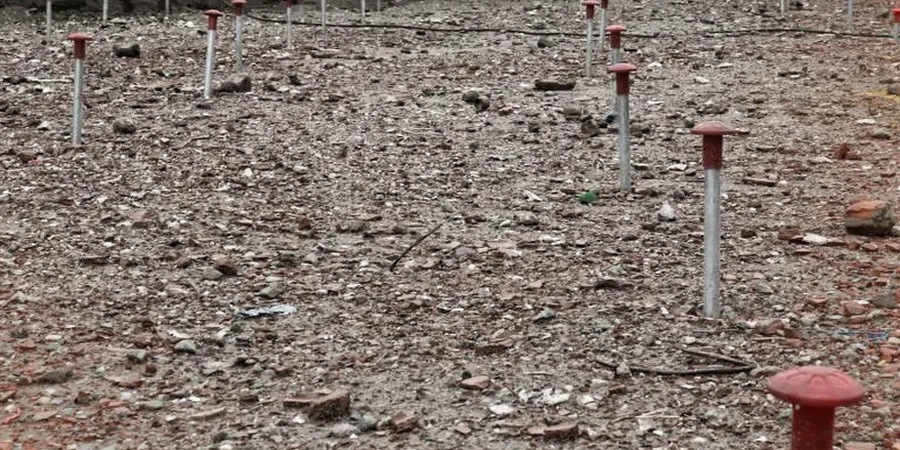
Illustrative image of Differential settlement analysis in Cardiff
A peat lens only 1.2 m thick can double the predicted differential movement at the surface if load eccentricity is not accounted for.

Our service areas

Process overview

A 10-storey residential block along the A470 ring road recently required a detailed differential settlement analysis because the borehole logs revealed a 1.2 m peat lens under one corner of the footprint. The characteristic approach we follow in Cardiff combines:
  • Site-specific consolidation tests on undisturbed samples from the soft Holocene clays.
  • Numerical modelling with Plaxis 2D to simulate the load distribution and predict angular distortion.
  • Reference to the local Building Control guidance based on Eurocode 7 and BS EN 1997-1:2004.
The table below summarises the typical parameters we evaluate for every differential settlement study in Cardiff.
Technical reference — Cardiff

Local context

Cardiff expanded rapidly during the 19th century, infilling the former tidal flats with coal waste and general rubble to create the present-day Bay area. That uncontrolled fill, combined with the underlying laminated clays of the Wentloog Formation, creates a classic differential settlement risk. A structure built partly on the old quay wall and partly on the soft fill can experience vertical differences exceeding 50 mm within the first five years. The differential settlement analysis in Cardiff evaluates these historical transitions, mapping the interface between natural ground and anthropogenic deposits to prevent structural damage.

Need a geotechnical assessment?

Reply within 24h.

Email: contact@geotechnical-engineering.biz

Relevant standards


BS EN 1997-1:2004 (Eurocode 7 – Geotechnical design), BS 5930:2015 (Code of practice for ground investigations), CIRIA C641 – Foundations on fill and made ground

Typical values

ParameterTypical value
Compression index (Cc)0.18 – 0.45 (estuarine clays)
Pre-consolidation pressure80 – 180 kPa (Cardiff Bay fill)
Coefficient of consolidation (cv)0.5 – 4.0 m²/year
Allowable angular distortion1/300 – 1/500 (per BS EN 1997-1)
Depth of compressible layer2 – 12 m (alluvium and peat)

Q&A


How much does a differential settlement analysis in Cardiff cost?

A typical differential settlement study covering a medium-sized building plot in Cardiff ranges between £610 and £1,400. The final cost depends on the number of boreholes, laboratory tests required, and the complexity of the numerical modelling.

What soil types in Cardiff pose the highest differential settlement risk?

The highest risk comes from the soft estuarine clays and discontinuous peat lenses of the Taff and Ely floodplains, plus the variable thickness of anthropogenic fill in the Bay area. The laminated structure of the Wentloog Formation can also produce sudden changes in compressibility over short horizontal distances.

Can a differential settlement analysis be done after foundation construction has started?

Yes, but it is less effective than a predictive study done during the design stage. If monitoring already shows uneven movement, a back-analysis using consolidation parameters from on-site samples can help design remedial measures such as compensation grouting or increased foundation stiffness.

Location and service area

We serve projects across Cardiff.

Location and service area