CARDIFF UK
CARDIFF
HomeSlopes & WallsSlope Stability Analysis

Slope Stability Analysis in Cardiff

Evidence-based design. Reliable delivery.

LEARN MORE

Cardiff's topography is more varied than many assume. The city centre sits on flat reclaimed land along the Taff estuary, but the northern suburbs climb into Carboniferous sandstone ridges. We see failure surfaces developing along clay seams within the Coal Measures strata. A proper slope stability analysis identifies these critical planes before any cut or fill operation begins. For projects in the Lisvane or Rhiwbina areas, we often combine limit equilibrium software with field data from ensayo SPT to constrain shear strength parameters. The groundwater regime near the Taff can shift rapidly after heavy rainfall, so we always model worst-case phreatic conditions. Our approach starts with a geological desk study and ends with a factor of safety calculation under Eurocode 7.
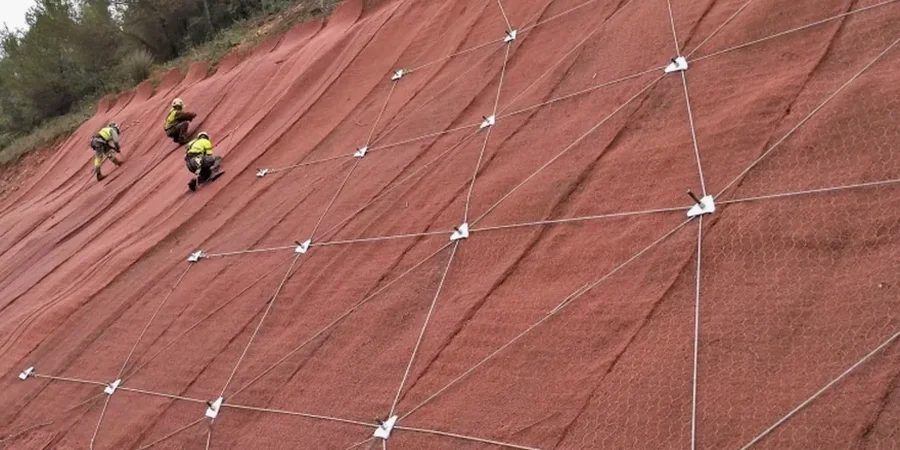
Illustrative image of Slope stability analysis in Cardiff
A 0.05 drop in factor of safety can be the difference between a stable slope and a costly failure.

Our service areas

Process overview

We recently worked on a housing development above the Garth Mountain escarpment. The site had a 15-metre-high slope with a dip slope geometry parallel to the bedding planes. That geometry creates sliding risk in the weathered mudstone. We ran multiple limit equilibrium analyses using Bishop's simplified method and Spencer's method to check inter-slice force assumptions. When the clay fill from previous mining operations was present, we incorporated drenaje geotecnico into the stability model to lower the phreatic surface. The key parameters we measure are:
  • Peak and residual friction angles from direct shear tests on clay seams
  • Unit weight and moisture content from undisturbed samples
  • Pore pressure ratios from standpipe piezometers installed in the slope
Each parameter feeds into a probabilistic stability model to account for spatial variability in the glacial till that caps many Cardiff hillsides.
Technical reference — Cardiff

Local context

Cardiff's history of coal mining leaves legacy issues. Old workings beneath slopes can collapse, causing sudden loss of toe support. We review British Geological Survey data and old mine plans before any analysis. The risk rises when development encroaches onto the valley sides of the Rhymney River. A slope that stood stable for 50 years can fail after a wet winter cycle. We install inclinometers to monitor lateral movement and crack gauges on tension cracks. Early warning data lets us adjust the stability model in real time.

Need a geotechnical assessment?

Reply within 24h.

Email: contact@geotechnical-engineering.biz

Visual overview


Relevant standards

Eurocode 7 (EN 1997-1:2004), BS 5930:2015, FHWA-NHI-05-050 (slope stability)

Typical values


ParameterTypical value
Cohesion (effective)5 - 25 kPa
Friction angle (peak)28° - 38°
Unit weight (saturated)19 - 22 kN/m³
Pore pressure ratio (ru)0.25 - 0.45
Factor of safety (static)≥ 1.30

Q&A

What is the typical cost range for a slope stability analysis in Cardiff?

A standard analysis for a single cross-section with laboratory testing costs between £890 and £3.460. The range depends on the number of sections, the complexity of the geology, and whether finite element modelling is required.

How deep do you need to investigate for a slope stability study?

We normally drill or excavate to at least 1.5 times the height of the slope below the toe. For a 10 m high slope, that means boreholes to 15 m depth to capture the full failure surface geometry.

What factor of safety does Eurocode 7 require for permanent slopes?

Eurocode 7 does not prescribe a single value. We typically target a minimum factor of safety of 1.30 for static conditions and 1.10 for seismic or rapid drawdown scenarios. These values follow UK national annex guidance.

Location and service area

We serve projects across Cardiff.

Location and service area