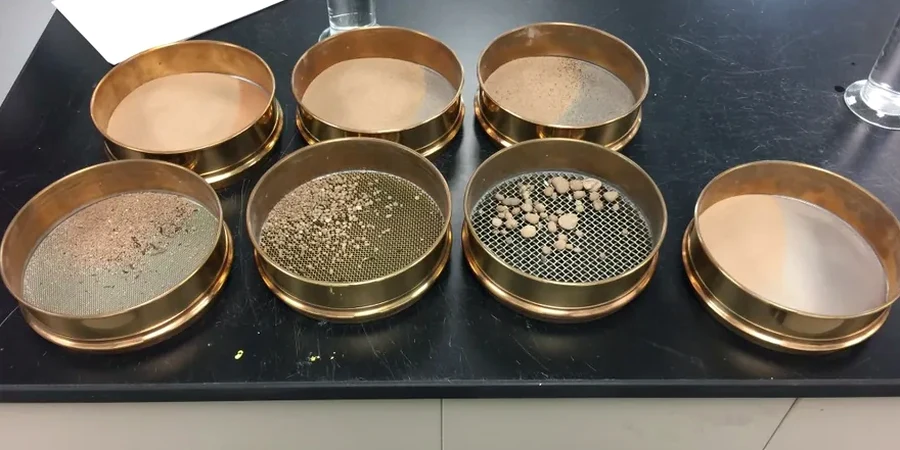
Laboratory testing forms the bedrock of geotechnical engineering in Cardiff, providing the quantitative data needed to transform site investigation findings into safe, economical designs. This category encompasses the full spectrum of controlled tests performed on soil and rock samples recovered from boreholes and trial pits across the city. From index tests that classify materials to advanced strength and compressibility assessments, laboratory analysis reveals how the ground will behave under the loads imposed by new structures, excavations, or infrastructure. In a city where the subsurface can change dramatically over short distances, relying solely on field observations without laboratory validation introduces unacceptable risk.
Cardiff's geological setting makes rigorous laboratory work particularly important. Much of the city centre and Cardiff Bay rests on thick alluvial deposits and soft estuarine clays associated with the River Taff and River Ely, while the northern suburbs transition into glacial till and the weathered Mercia Mudstone Group. These fine-grained soils exhibit complex time-dependent behaviour, including creep and consolidation, that can only be accurately characterised through specialised tests. A direct shear test provides critical drained strength parameters for the coarse-grained alluvium and glacial deposits, helping engineers assess slope stability along the A4232 or foundation bearing capacity in areas like Grangetown. Equally, a comprehensive soil mechanics study integrates classification, compressibility, and strength data to model settlement and heave, issues that directly affect the many residential and commercial developments planned across the capital.
All laboratory testing in Cardiff is conducted in accordance with British Standards, primarily BS 1377 for soils and BS EN ISO 17892 for the harmonised European methods, as well as guidance from the UK Specification for Ground Investigation published by the Institution of Civil Engineers. These standards dictate everything from sample preparation to testing rates and reporting formats, ensuring consistency and legal defensibility. For schemes requiring planning permission from Cardiff Council or consent from Natural Resources Wales, particularly those near controlled waters or on potentially contaminated land, accredited testing under UKAS to BS EN ISO/IEC 17025 is often a non-negotiable condition. Compliance with Eurocode 7 also demands that characteristic ground values be derived from laboratory results using statistical methods, further underlining the need for high-quality data.
The types of projects that demand thorough laboratory input in Cardiff are diverse. Major regeneration initiatives, such as the continued transformation of Cardiff Bay and the construction of new student accommodation blocks in Cathays, require detailed consolidation testing to predict settlement magnitudes and rates. Road and rail schemes, including the South Wales Metro and improvements to the M4 corridor, rely on triaxial and direct shear data for embankment design. Even smaller residential extensions on the expansive clays found in areas like Radyr can benefit from index testing and swell pressure assessment to avoid structural cracking. In every case, the laboratory acts as the bridge between site conditions and design parameters, turning unknown ground into manageable engineering quantities.
The testing schedule depends on the ground conditions encountered, but a typical Cardiff investigation includes moisture content, Atterberg limits, particle size distribution, and bulk density as index tests. For strength, unconsolidated undrained triaxial tests on cohesive soils and direct shear tests on granular materials are common. Oedometer consolidation tests are essential where soft alluvial clays are present to assess settlement. Chemical testing for pH and sulphates is also critical due to the potential for aggressive ground conditions in former industrial and estuarine areas.
British Standards, particularly BS 1377 and BS EN ISO 17892, prescribe strict methods for sample preparation, test execution, and reporting. These standards ensure that results are reproducible and comparable across different laboratories. For Cardiff projects, adherence is mandatory for regulatory approval, and UKAS-accredited laboratories must demonstrate compliance. The standards also align with Eurocode 7 requirements, allowing engineers to derive characteristic values from test data using recognised statistical procedures for limit state design.
Cardiff's geology includes highly variable deposits such as soft estuarine clays, river alluvium, and glacial till, each with distinct engineering behaviours. Laboratory testing quantifies properties like undrained shear strength, compressibility, and permeability that cannot be reliably estimated from field descriptions alone. For example, the Mercia Mudstone in north Cardiff can degrade upon exposure, and only laboratory slake durability testing can predict this. Without this data, designs risk excessive settlement or slope failure.
The duration depends on the number and type of tests. Basic classification tests can be completed within a week, while triaxial and consolidation tests may require two to four weeks due to the need for slow shearing or incremental loading. Advanced tests like resonant column or cyclic triaxial take longer. A phased approach is common, where index results guide the selection of more advanced tests. Reputable laboratories will provide a clear schedule at the outset based on the project's specific requirements.