CARDIFF UK
CARDIFF
HomeInvestigationSondaje SPT (Standard Penetration Test)

SPT (Standard Penetration Test) in Cardiff – Reliable Soil Data for Safe Foundations

Evidence-based design. Reliable delivery.

LEARN MORE

A common mistake we see among contractors in Cardiff is relying solely on surface soil descriptions before designing foundations. The geology here varies dramatically within a few hundred metres — from glacial till over bedrock to deep alluvial deposits along the Taff valley. Without a Standard Penetration Test to quantify resistance at depth, a foundation design risks being either dangerously optimistic or unnecessarily conservative. Combining SPT data with a georradar survey helps map buried obstructions before drilling, while the veleta de campo test provides complementary shear strength data in cohesive layers. Getting the soil profile right from the start saves weeks of redesign and thousands in concrete.
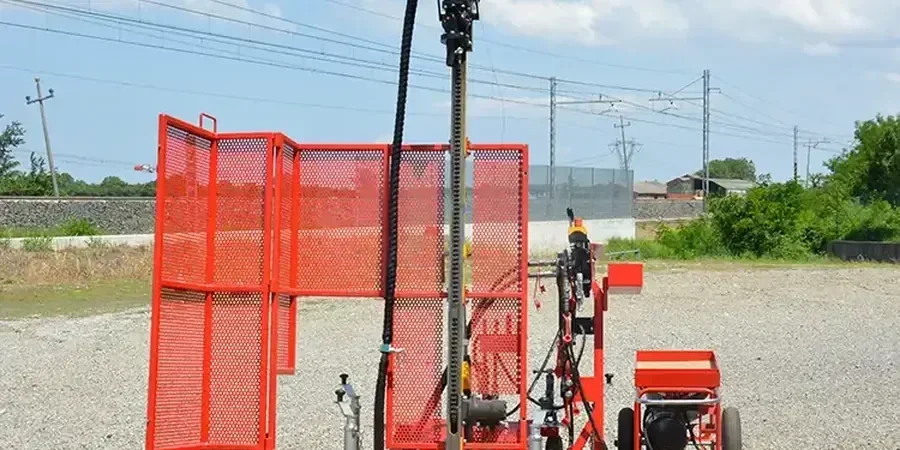
Illustrative image of SPT (Standard Penetration Test) in Cardiff
In Cardiff's variable glacial and alluvial ground, an SPT without hammer energy calibration can overestimate strength by 30% or more.

Our service areas

Process overview

The SPT procedure in Cardiff follows BS EN 1997-2:2007 and BS EN ISO 22476-3, with the hammer energy ratio calibrated to 60% as required by UK practice. The local ground conditions — particularly the stiff clays and dense sands of the Mercia Mudstone Group — demand careful interpretation of blow counts because the N-value can spike in gravel lenses. Our technicians record the blow count for each 150 mm increment and stop at 50 blows if refusal is reached, which happens often in the bedrock areas near the city centre. We correlate the N-values to relative density and angle of internal friction using recognised empirical relations (Peck, Terzaghi, etc.). For projects on the coastal plain, we cross-reference results with ensayo CPT soundings to validate the stratigraphy, and where soft alluvium is suspected, a presurometro test adds the deformation modulus needed for settlement analysis.
Technical reference — Cardiff

Local context

In Cardiff, we often see foundation designs based on SPT data from a single borehole on a large site. That is a gamble. The transition from firm glacial till to soft alluvium can happen within ten metres, especially near the River Taff or the docks. One client last year used a single SPT value to design pad footings across a 0.8 ha site, and the differential settlement reached 35 mm within six months. The cost of retrofitting underpinning was four times the price of an adequate investigation. A proper grid of SPT tests across the site, combined with a clasificación de suelosanalysis in the lab, would have caught the variability early.

Need a geotechnical assessment?

Reply within 24h.

Email: contact@geotechnical-engineering.biz

Visual overview


Relevant standards

BS EN 1997-2:2007 (Eurocode 7 – Ground investigation and testing), BS EN ISO 22476-3 (Standard Test Method for SPT), BS 5930:2015 (Code of practice for site investigations), CIRIA C641 (Guidance on SPT in UK soils)

Typical values


ParameterTypical value
Hammer energy ratio (ERi)60% ± 5%
Rod length correction (C_R)1.0 (rod length > 10 m)
Borehole diameter correction (C_B)1.0 for 100 mm diameter
Sampler typeStandard split-spoon (35 mm ID, 51 mm OD)
Blow count recording interval150 mm per increment
Refusal criterion50 blows for zero advance

Q&A

What does a Standard Penetration Test cost in Cardiff?

The typical cost for an SPT in Cardiff ranges from £390 to £560 per test point, depending on depth, access conditions, and the number of tests on the same site. Volume discounts apply for five or more test locations.

How is the SPT different from a CPT in Cardiff soils?

The SPT provides a disturbed soil sample for visual classification and lab testing, while the CPT gives a continuous profile of cone resistance and sleeve friction. In Cardiff's gravelly glacial tills, the SPT is often preferred because the CPT cone can be damaged by cobbles. We recommend the SPT when you need physical samples for classification.

What depth is typically reached with SPT in Cardiff?

Depths of 10 to 20 metres are common in Cardiff's alluvial valleys. In areas underlain by Mercia Mudstone bedrock, refusal can occur at 5 to 8 metres. The borehole is advanced using rotary drilling through hard layers, and the SPT is run at 1.5 m intervals unless continuous sampling is specified.

How long does it take to get SPT results in Cardiff?

Field execution takes about one hour per test point at 10 m depth. The laboratory report with N-values, soil description, and interpreted parameters (relative density, friction angle) is delivered within 3 working days after sampling. Urgent same-week service is available for an additional fee.

Location and service area

We serve projects across Cardiff.

Location and service area