CARDIFF UK
CARDIFF
HomeFoundationsMicropile Design

Micropile Design in Cardiff

Evidence-based design. Reliable delivery.

LEARN MORE

Cardiff’s geology is split. The city centre sits on soft estuarine clays and alluvial deposits. Up towards Lisvane and Rhiwbina you find dense glacial tills and bedrock close to the surface. A micropile design that works for a new-build in Cardiff Bay won’t suit a retrofit on Cathedral Road. That’s why we treat every Cardiff project individually. Before we start the structural load calculations we run a ensayo SPT at multiple depths to map the strength profile and identify weak layers.
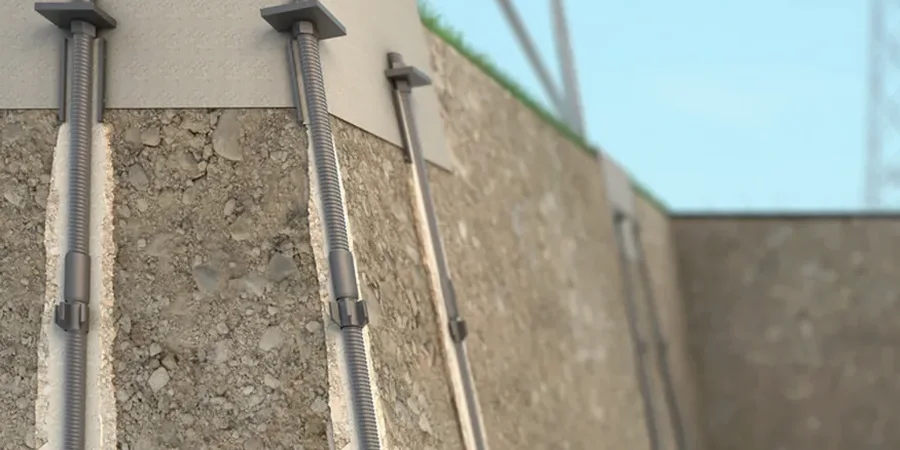
Illustrative image of Micropile design in Cardiff
A micropile transferring load through soft alluvium into the Triassic sandstone is a proven solution for Cardiff’s mixed ground conditions.

Our service areas

This service complements our laboratory testing work for a complete project analysis.

Process overview

A recent school extension in Llanishen needed foundation loads of 600 kN per column. The site had made ground over soft clay. We designed 200 mm micropiles socketed into the underlying sandstone. The solution was faster than piling and caused minimal vibration near existing buildings. For sites with high groundwater, like those near the Taff, we combine the micropile design with a presurometro test to measure the lateral stiffness of the soil. In Cardiff’s central areas where basements are common we also use cimentaciones-sismicas analysis to check that the micropile group can resist seismic racking under the small local seismic events.
Technical reference — Cardiff

Local context

The drilling rig for micropiles is compact. It fits through a standard gateway and works under low headroom. That matters in Cardiff’s tighter urban streets around Canton and Pontcanna. The real risk is hitting an old mine shaft or a buried foundation. We always run a georradar-gpr survey first to map underground obstructions. Without that step you can shear the casing or lose the grout column into a void. Cardiff’s variable fill from industrial history makes this a non-negotiable part of the design process.

Need a geotechnical assessment?

Reply within 24h.

Email: contact@geotechnical-engineering.biz

Relevant standards


Eurocode 7 (EN 1997-1:2004) – geotechnical design, BS EN 14199:2015 – execution of micropiles, BS 5930:2015 – site investigation code of practice

Typical values

ParameterTypical value
Typical pile diameter150 mm – 300 mm
Working load range200 kN – 1 200 kN per pile
Bond length in bedrock3 m – 6 m (sandstone)
Design standardEurocode 7 (EN 1997-1:2004)
Corrosion protection classClass 2 (double protection for permanent works)

Q&A


What is the typical cost range for micropile design in Cardiff?

For a standard residential or light commercial project in Cardiff you can expect the design and testing package to fall between £1.050 and £3.800. The final figure depends on the number of piles, ground conditions, and load requirements.

How deep do micropiles go in Cardiff’s ground?

Depth varies by location. In Cardiff Bay you might need 12–18 m to reach the sandstone. In northern suburbs like Whitchurch bedrock can be as shallow as 3 m. We always base the design on actual borehole data.

Can micropiles be installed inside existing buildings in Cardiff?

Yes. The equipment is less than 2.5 m tall and drills through a 300 mm opening. We have completed micropile underpinning inside Victorian basements on Richmond Road and in converted warehouses near the stadium.

Location and service area

We serve projects across Cardiff.

Location and service area